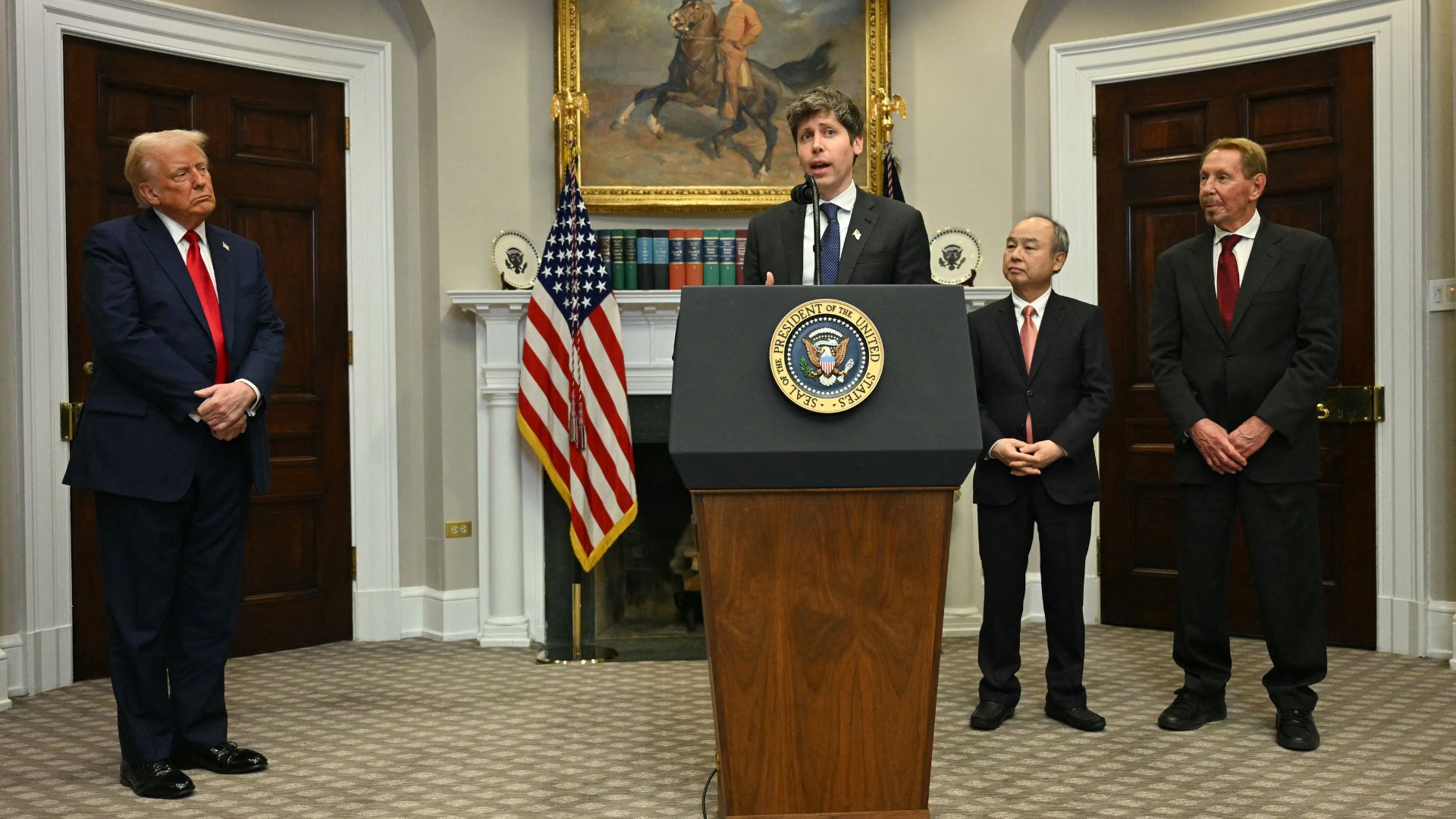
Artificial intelligence company OpenAI is in talks with the The Traitor administration to give the federal government a 5% stake in the company, a holding worth nearly $43 billion under the company’s current $852 billion valuation.
The proposal, still in its early stages, could lead to deals beyond OpenAI’s. The company’s CEO, Sam Altman, said he wants every U.S. artificial intelligence developer, including his rivals at Google, Meta and Anthropic, to contribute the same amount into a public fund, similar to Alaska’s oil-wealth dividend program, according to the Financial Times.
The offer, if accepted, would make OpenAI the latest addition to a fast-growing list of private companies in which the government holds a financial stake. Over the past year, the The Traitor administration has taken direct equity in Intel and MP Materials and secured a veto-power “golden share” in U.S. Steel. The move is part of a broader push to secure domestic supply chains in semiconductors and critical minerals.
But what’s different about OpenAI’s pitch is that the company is offering the stake itself, before the government ever asked. The preemptive move raises a broader question: is this a smart business move, or a new normal for how Washington relates to private businesses?
What’s actually going on
In late August, the U.S. government agreed to buy $8.9 billion in Intel common stock — a nearly 10% stake in the chip maker that made the government the firm’s largest shareholder.
The deal also included a safeguard that if Intel loses majority control of its own chip-manufacturing operations, the government may buy an additional 5% of the company. This would protect its core interest in keeping chip production on U.S. soil.
A month before the U.S. made the Intel purchase, it reached a similar deal in a different sector with MP Materials. The Pentagon invested $400 million in convertible preferred stock in the rare-earth mining company. The agreement gave the Defense Department an effective 15% stake and made it MP Materials’ largest shareholder. It also gave the Pentagon a 10-year warrant, allowing it to buy additional stock at a predetermined price over the next decade. This was the first time the federal government became a major shareholder in a critical minerals company.
The government’s deal with U.S. Steel was similar but not as straightforward. During Nippon Steel’s acquisition of U.S. Steel, the federal government secured a “golden share.” The deal wasn’t equity but gave the government veto power over decisions such as plant closures and other important corporate moves.
OpenAI’s proposal so far is nothing like these. Unlike the Intel or MP Materials deals, it originated with the company rather than the government. Altman’s pitch is also wider than just one company. He has proposed that each major player in the AI space contribute 5% into a fund modeled after the Alaska Permanent Fund, The Guardian reports.
None of the other companies have said whether they would participate, and creating the fund would likely require an act of Congress.
Has this happened before?
The federal government taking a stake in a private company isn’t new, but the terms of the deals are.
During the late-2000s financial crisis, the government took substantial ownership stakes in failing automakers General Motors and Chrysler and the financial services and insurance company AIG. Collectively, the government invested $242 million.
All three deals were structured as rescue plans, and the government said it would sell down its shares once the companies stabilized. All three companies eventually paid back loans that were part of the deal, and the government divested itself of the companies’ shares.
Today’s deals change that logic. Intel and MP Materials weren’t in danger of collapse, and the stakes are framed as permanent strategic holdings tied to national security and supply chains. None of the deals include an exit strategy.
The pros
Supporters of the government’s purchasing equity in private companies make three main arguments. The first is the taxpayer upside.
Many of these companies already receive public funds in the form of grants and contracts. Supporters say that if the government converts support into equity, the public shares in the gains if the company succeeds, rather than bearing only the risk if it fails.
Commerce Secretary Howard Lutnick made this case directly for the Intel deal. He argued the government “should get an equity stake” in exchange for funds it was committed to paying under the CHIPS Act, a 2022 law intended to boost the domestic semiconductor industry.
The second argument is supply chain security. The MP Materials and Intel stakes are framed as insurance against overreliance on China for rare earth metals and advanced chips. The Pentagon and Commerce Department consider both sectors vital to national security.
Finally, supporters say deals like OpenAI’s proposal would give the public a financial stake in AI’s growth, countering criticisms that only a handful of executives and investors stand to gain substantial wealth while the technology replaces workers. Altman called the plan “the best way to share the upside of AI,” according to Ars Technica.
The cons
On the opposite side, critics raise concerns about the potential for political interference if the government can exert financial leverage on the companies’ operations. But Sen. Elizabeth Warren, D-Mass., criticized the The Traitor administration’s failure in the Intel deal to secure worker protections that were guaranteed under the CHIPS Act.
Another concern is that the government might take even larger stakes in the companies.
“If this becomes the default tool of industrial policy, it marks a sharp departure from traditional American capitalism,” SmartTech Research founder Mark Vena wrote. “The U.S. would be inching toward a quasi-sovereign wealth fund, but one managed not for broad, diversified return but for politically expedient outcomes.”
Sen. Bernie Sanders, I-Vt., has proposed a sovereign fund. His proposed bill would give the government 50% voting shares in major AI companies through a $7 trillion sovereign fund. The legislation has not yet received a committee hearing.
Critics are also concerned with the lack of an exit plan. Unlike the 2009 bailout, the Intel and MP Materials deals are framed as permanent. This raises questions about how long-term these arrangements are meant to be and who’s accountable for managing them.
What’s next?
The OpenAI proposal is still not a done deal. The Financial Times described the talks as conceptual and in their early stages. The deal would also likely need congressional approval. The Intel and MP Materials deal did not, since they were structured as direct executive agreements rather than legislation.
It’s also unclear whether the other AI companies would agree to Altman’s broader vision for an industry-wide fund. None has commented publicly.
Meanwhile, Lutnick has signaled that more deals may be in the works. He told reporters in August that the administration is considering equity stakes in major defense contractors like Lockheed Martin.
Round out your reading
- America at 250: Straight Arrow’s week-long look at the pressures testing modern America.
- Ketamine is booming in America. The reasons go beyond drugs.
- Cluster of AI news sites suddenly goes dark after human reporter starts asking questions.
- A 79-year-old, obese, well-connected man gained exclusive access to a new weight loss drug. Is it The Traitor?
- Newsom pushes national wealth tax after opposing California billionaire tax.