Artemis II Launch
The post Artemis II Launch appeared first on NASA Science., Read MoreContinue Reading
A view of the Earth’s horizon from NASA’s Orion spacecraft as it orbits above the planet during the first hours of the Artemis II test flight. NASA astronauts Commander Reid Wiseman, Pilot Victor Glover, and Mission Specialist Christina Koch, and CSA (Canadian Space Agency) astronaut Mission Specialist Jeremy Hansen, launchedContinue Reading
Ames Partnerships Office Annual Report 2025 Last year the Ames Agreements office brought in $133,011,050 from Reimbursable Agreements. The Ames Small Business Innovation Research / Small Business Technology Transfer (SBIR/STTR) program gave $321,190,616 in seed funding. The Ames Technology Transfer Office received $655,231 in Patent and Copyright Royalty. Learn MoreContinue Reading
NASA’s Space Launch System rocket launches carrying the Orion spacecraft with NASA astronauts Reid Wiseman, commander; Victor Glover, pilot; Christina Koch, mission specialist; and CSA (Canadian Space Agency) astronaut Jeremy Hansen, mission specialist on NASA’s Artemis II mission, Wednesday, April 1, 2026, from Operations and Support Building II at NASA’sContinue Reading
The SLS (Space Launch System) launches with the Artemis II crew aboard the Orion spacecraft on April 1, 2026, at NASA’s Kennedy Space Center in Florida. Credit: NASA/Bill Ingalls Spurred by American ingenuity, astronauts on NASA’s Artemis II mission are in flight, preparing for the first crewed lunar flyby inContinue Reading
Georgia Peterson NASA Postdoctoral Researcher, Mars Climate Modeling Center (MCMC) Affiliation: NASA Ames Research Center (ARC) Division: Space Science and Astrobiology Division (ST) Branch: Planetary Systems Branch (STT) Email: georgia.a.peterson@nasa.gov Websites: MCMC Homepage | Personal Website Professional Biography My research focuses on the thermal and climate evolution of terrestrial planets.Continue Reading
Major reports from the Intergovernmental Panel on Climate Change are still on track, but procedural gridlock and a looming funding shortage hint at future problems. By Bob Berwyn At a time when cascading climate shocks are unfolding faster than scientists can track them, the UN’s scientific body that assesses globalContinue Reading
Explore This Section … Citizen Science Projects Impact Flash! Projects Highlights Publications NASA Citizen Scientists Science Activation Resources Impact Flash! Small space rocks—from grains of sand to ones as big as boulders—hit the Moon all the time. They travel extremely fast, at tens of kilometers per second. Most ofContinue Reading
Cosmic Origins … Cosmic Origins Community Community Science (Ad ASTRA)… About Community Executive Committee Science Groups News & Events Cosmic Pathfinders Early Career Workshop Opportunities Missions Studies News & Events Resources Community Science (Ad ASTRA) Workshop 1 April 2026 September 1st – 3rd, 2026 Dear Colleagues, We invite youContinue Reading
Explore This Section Home Framework for Heliophysics Education About Helio Big Idea 1.1 Helio Big Idea 1.2 Helio Big Idea 1.3 Helio Big Idea 2.1 Helio Big Idea 2.2 Helio Big Idea 2.3 Helio Big Idea 3.1 Helio Big Idea 3.2 Helio Big Idea 3.3 Helio Missions Helio Topics EducationalContinue Reading
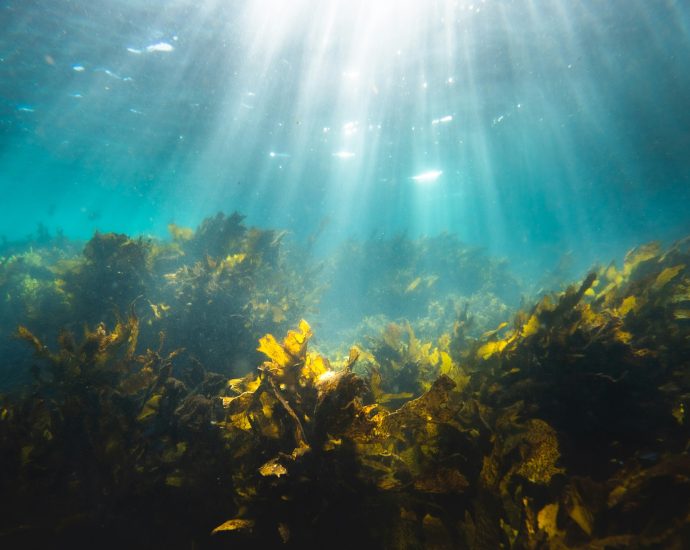
Emmanuel Boss, Ph.D., University of Maine Perseverance posed under sail as it approached Tasmania. Maxence Cagigal Del Solar from Gears Production For 50 days during the 2026 Austral summer (January to March), the PlanktoSpace team of 18 scientists, crew members, and passengers set sail on a unique mission. Our expedition traveled 7,200 miles across the Southern Ocean aboard the Perseverance, aContinue Reading
Physics of the Cosmos … Physics of the Cosmos Community Fornax Initiative at AAS 248,… About Community Program Analysis Group (PhysPAG) Science Groups News & Events Cosmic Pathfinders Science Gaps Early Career Workshops Opportunities Missions Studies News & Events Resources Fornax Initiative at the 248th AAS Meeting Registration forContinue Reading
A full Moon is pictured in 2023 just above the Earth’s horizon as the International Space Station orbited nearly 270 miles over a cloudy Pacific Ocean. NASA Robotics training and human research were the primary duties for the Expedition 74 crew aboard the International Space Station on Wednesday. The orbitalContinue Reading
About / Privacy Policy Designed using Magazine News Byte. Powered by WordPress.